OLD-TIME CARD-PLAYERS
Judge John Pettit and William Digby

Lafayette Sunday Times - In the early history of Lafayette card-playing was more than an amusement - with a good many men it was "business." The founder of Lafayette, "Old" Digby, was for many years the most noted card player on the Wabash. There are many anecdotes of him that have been handed down and are worth preserving.
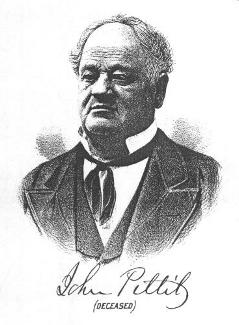 If
the old settlers are to be believed, "Old Dig" and the
late Judge Pettit
had many a lively tussle at the card table. On one
occasion the two
sat down early in the forenoon at their favorite game of
"old sledge,"
five dollars a game. About 4 o'clock in the
afternoon, when Pettit
was about seventy dollars winner, he announced to Digby
that he must quit.
"What are you going to quit for?" inquired Digby. "I
want to go and
take care of my horse," replied Pettit. In those
days every lawyer
kept a horse to ride the circuit. "I can go without
my dinner," the
judge continued, "but I am not going to abuse my horse
just to accommodate
you at the game." Pettit retired with Digby's $70 in
his pocket.
The next morning, bright and early, they were at it
again. Digby
had a big streak of luck, and before 12 o'clock had bagged
$120 of Pettit's
money. Raking from the table the last $10 put up, he
announced to
Pettit that he was going to quit. "What are you
going to quit for?"
inquired Pettit. "Why I must go and feed my horse,
John." "Why
- you," replied Pettit, "you haven't got any horse!"
"Well, John,
if I haven't got any horse," slapping his hand on his
breeches pocket,
"I've got the money to buy one!" The game was
closed.
If
the old settlers are to be believed, "Old Dig" and the
late Judge Pettit
had many a lively tussle at the card table. On one
occasion the two
sat down early in the forenoon at their favorite game of
"old sledge,"
five dollars a game. About 4 o'clock in the
afternoon, when Pettit
was about seventy dollars winner, he announced to Digby
that he must quit.
"What are you going to quit for?" inquired Digby. "I
want to go and
take care of my horse," replied Pettit. In those
days every lawyer
kept a horse to ride the circuit. "I can go without
my dinner," the
judge continued, "but I am not going to abuse my horse
just to accommodate
you at the game." Pettit retired with Digby's $70 in
his pocket.
The next morning, bright and early, they were at it
again. Digby
had a big streak of luck, and before 12 o'clock had bagged
$120 of Pettit's
money. Raking from the table the last $10 put up, he
announced to
Pettit that he was going to quit. "What are you
going to quit for?"
inquired Pettit. "Why I must go and feed my horse,
John." "Why
- you," replied Pettit, "you haven't got any horse!"
"Well, John,
if I haven't got any horse," slapping his hand on his
breeches pocket,
"I've got the money to buy one!" The game was
closed.
Digby, who was a bachelor, had a small
one-story frame house put
up on Main street, close to where the canal now is, as an
office and sleeping
apartment. After it was finished, but the plastering
not sufficiently
dry to be occupied, Digby and Pettit sat down to play
their favorite game
of old sledge. Digby's money  was soon exhausted and Pettit declared
the game closed. Digby proposed one more game,
staking his new house
against a certain sum of money. The game was played
and Pettit was
the winner. The next morning he made a bargain with
a house-mover
to remove the building to a lot he owned on the south side
of Main street,
a little east of the public square. The wooden
wheels were put under
it, and in the afternoon it was started up Main street
with a long team
of oxen before
it, and at dark had just reached the public square.
That night Digby
and Pettit had another game, and in the morning there was
a readjustment
of the wheels and the house was started on its return
towards the river.
It reached its proper place in the street and was left to
be put back in
its old position on the morrow. But the next morning
it was started
up town again. The next day it took the other
direction, and by this
time the whole town came to understand it. Finally
it remained in
the public square over Sunday and on Monday continued its
way up Main street
and was wheeled into Pettit's lot. He soon moved his
books into it
and for many years occupied it as a law office.
was soon exhausted and Pettit declared
the game closed. Digby proposed one more game,
staking his new house
against a certain sum of money. The game was played
and Pettit was
the winner. The next morning he made a bargain with
a house-mover
to remove the building to a lot he owned on the south side
of Main street,
a little east of the public square. The wooden
wheels were put under
it, and in the afternoon it was started up Main street
with a long team
of oxen before
it, and at dark had just reached the public square.
That night Digby
and Pettit had another game, and in the morning there was
a readjustment
of the wheels and the house was started on its return
towards the river.
It reached its proper place in the street and was left to
be put back in
its old position on the morrow. But the next morning
it was started
up town again. The next day it took the other
direction, and by this
time the whole town came to understand it. Finally
it remained in
the public square over Sunday and on Monday continued its
way up Main street
and was wheeled into Pettit's lot. He soon moved his
books into it
and for many years occupied it as a law office.
In the early days on the Wabash nearly all the lawyers
played poker.
During court week the time was about equally divided
between trying cases,
playing poker and attending horses races. It was no
uncommon thing
for Judge Porter - the first circuit judge, and by the
way, a Connecticut
Yankee - to adjourn his court to attend a horse
race. He was very
fond of cards, but would enforce the law against
gambling. And thus
it once happened, as published in the Sunday Times of
February 6, that
he was indicted along with several members of the bar, in
the Tippecanoe
circuit court, for gaming. The records shows that he
pleaded guilty,
assessed the fine against himself, and paid it.
The Fort Wayne Daily Gazette, page 4
April 16, 1881
Fort Wayne, Indiana